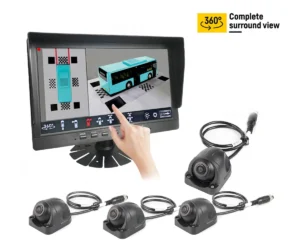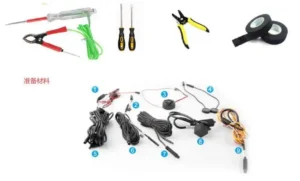
A buyer asked me whether a wired forklift camera would work in a cold store at −20°C. If I were drawing up that quotation today, my first question would be: where does the forklift spend the hour before the operator turns the key?
A truck driven in from a warmer loading area and a truck left in the freezer through a break can arrive at the same aisle with very different monitor temperatures. For the buyer, the useful specification is how soon the operator needs a clear moving picture after startup.
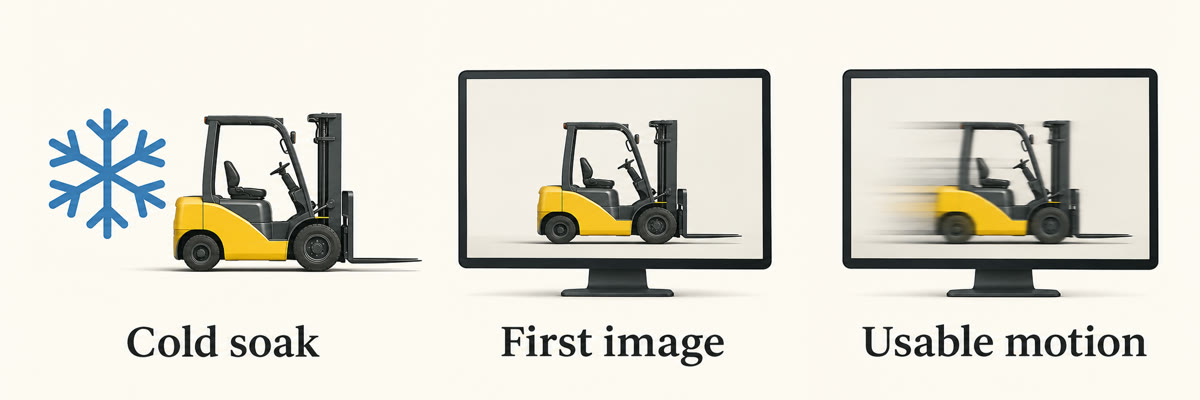
The first picture tells only half the story
In my reply at the time, I flagged sluggish LCD response after more than an hour in the cold and gave a rough warm-up estimate of five to ten minutes after power-on. The exchange contains no timed test for a named monitor. I would ask for the exact part number and a cold-start demonstration before using that estimate in a purchase specification.
A simple trial before ordering for the fleet
- Recreate the start of a shift. Park the forklift safely, secure it and leave the camera and monitor powered off under the agreed cold-store conditions. Record the temperature, soak time and where each unit is mounted.
- Time two moments. From power-on, record when the first picture appears. Then move a striped card across the stationary camera’s view from a safe position. Record when the operator can follow its edges clearly on the display. Keep the truck stationary throughout.
- Compare the result with the job. Does the operator need that view immediately at key-on? Can the shift accommodate the measured delay? Agree on the acceptable time before the trial, then repeat under the same conditions.
If the cab stays warm and only the camera enters the freezer, say so in the enquiry. It changes which components need the cold-soak trial. Send the proposed camera and monitor models, the lowest temperature at each mounting point, the longest powered-off period and your maximum acceptable startup time. That gives us a specific configuration to check before you commit to the fleet order.