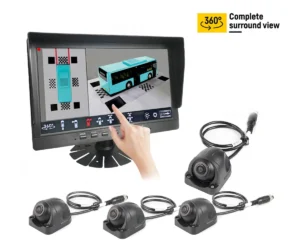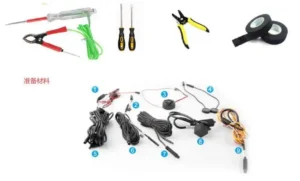
The camera could be smaller. It just couldn’t be any bigger. That was the one instruction our customer attached to a request for a wired forklift camera kit. Their wireless picture had been giving them trouble, and they wanted a price for trying a cable instead.
I sent the quote. But there was a question I couldn’t answer from the camera dimensions: where would the cable go when the forks went up?
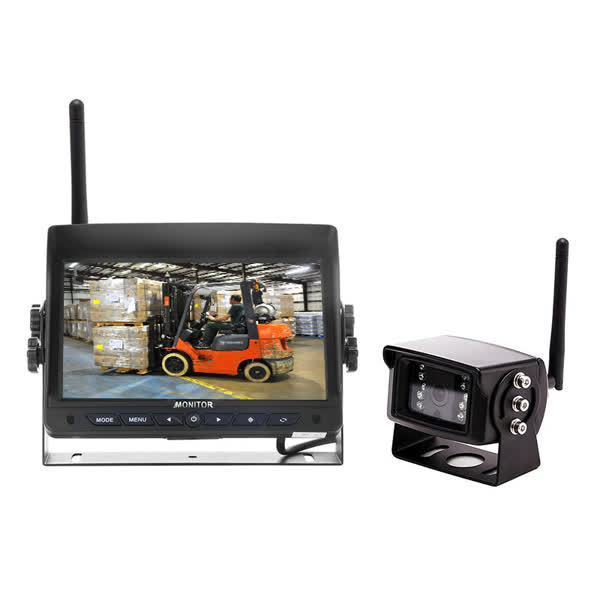
The camera fits. Where does its lead go?
A dimension drawing tells me whether the camera body fits its bracket. It tells me very little about the space behind the plug, or which parts of the truck move away from one another. Here the front camera was mounted on the fork assembly. The screen stayed with the operator.
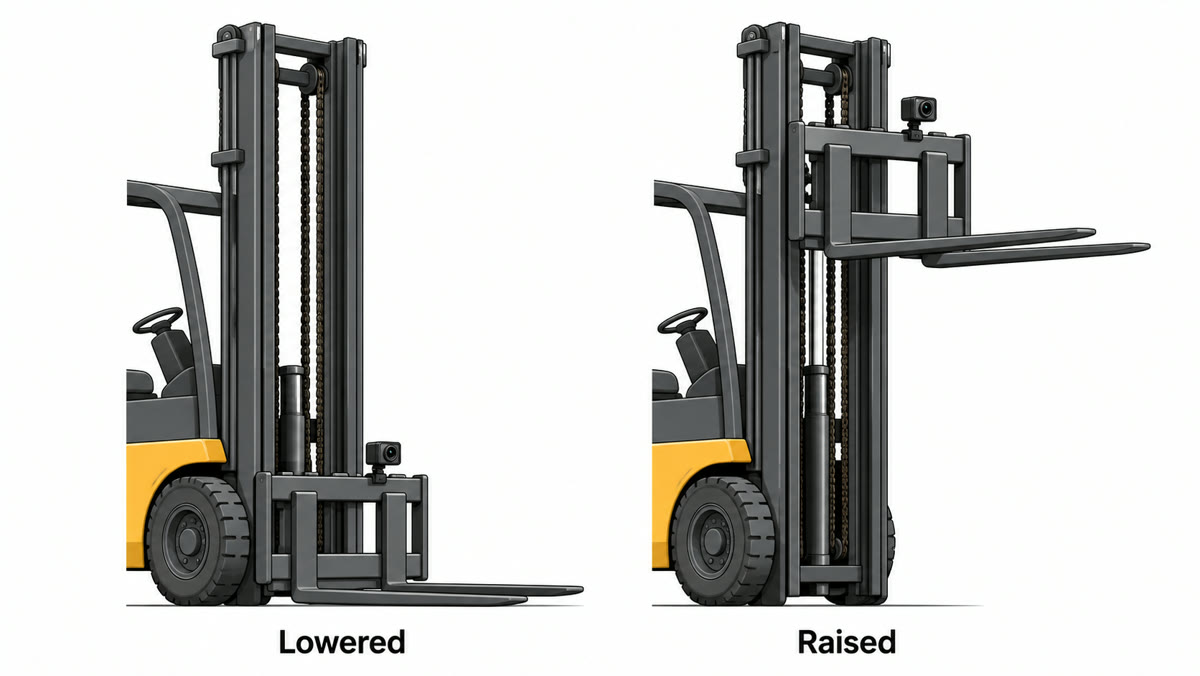
Picture a lead long enough to reach when the carriage is down. Now picture the same lead with the carriage raised. There are two things to account for: the extra reach during the lift and the return of that length on the way down. Ordering a longer extension answers only the first question.
What I’d ask the installer to send
Alongside the old camera dimensions, I’d ask the truck’s service technician for the mast type, the carriage travel and a marked-up photo showing the fixed and moving points. If the truck already has an approved accessory cable route, its drawing is more useful to me than a guess at a cable length.
That exchange got as far as a quote and a question about routing. I don’t have a completed installation to show you. If you’re pricing a similar change, put the camera envelope and the mast travel on the same enquiry. It gives the person quoting the kit a chance to spot the expensive unknown while it’s still just a line on a drawing.
What a close-up leaves out
- When did the wireless picture drop, and at what carriage position?
- Photograph the whole mast and mark the fixed and moving points; then add a close-up of the camera and plug.
- Ask the service technician for the approved accessory route and full carriage travel before choosing a cable.
Peter | Kysail