When buying a rear view camera or CCTV camera for a truck, one specification appears again and again:
IP67. IP68. IP69K.
For many buyers, the first reaction is simple:
“The higher the number, the more waterproof the camera.”
This idea is not completely wrong.
But it can easily lead to the wrong camera selection.
For a passenger car, surviving rain and normal vehicle washing may be enough. But a camera installed on a heavy truck, trailer, excavator, agricultural machine or special-purpose vehicle can face a very different environment.
Mud may completely cover the camera housing.
Road water may continuously spray from the wheels.
Dust can remain around the camera joints for weeks.
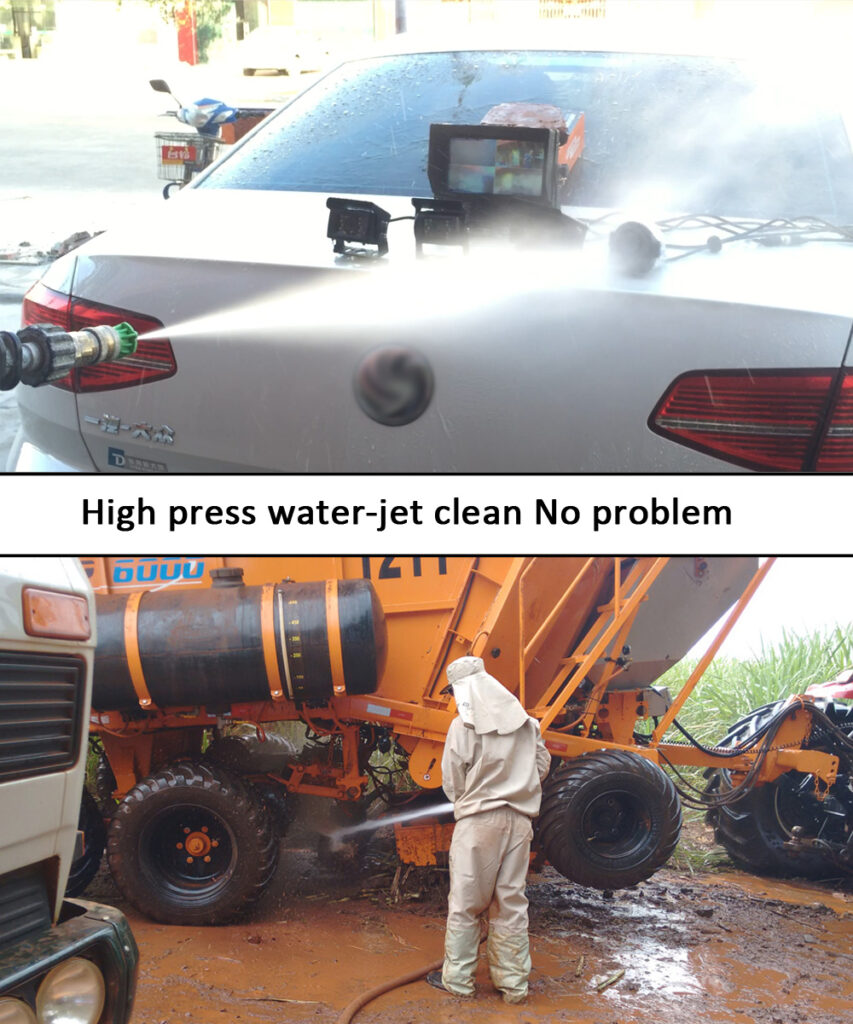
And when the vehicle returns to the yard, the maintenance team may clean it with a high-pressure water gun.
This is where IP69K becomes important.
Quick Answer: What Does IP69K Mean for a Vehicle Camera?
IP69K is not simply a marketing word for “very waterproof.”
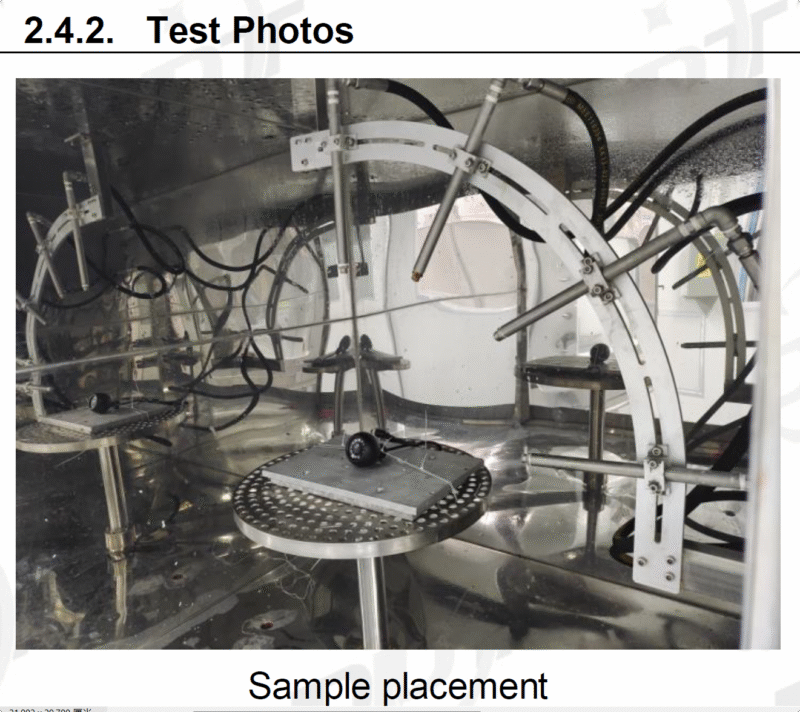
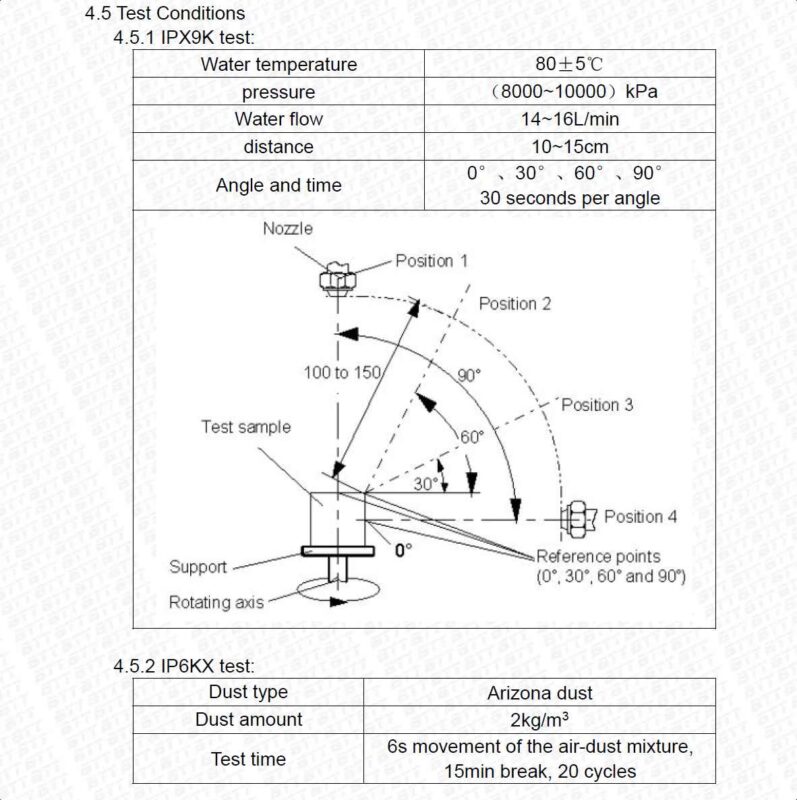
For road vehicle electrical equipment, the IP protection framework is covered by standards such as ISO 20653, which considers enclosure protection against foreign objects, dust and the effects of water entering electrical equipment.
For trucks and machinery, the practical meaning is easier to understand:
A camera may survive rain but still fail after repeated high-pressure washing.
That is the key difference.
Rain and High-Pressure Washing Are Not the Same
Imagine a rear camera installed on a 53-foot trailer.
The trailer drives through rain for six hours.
Water reaches the camera, but most of the water falls or flows naturally around the housing.
Now imagine the same trailer returning to a fleet yard.
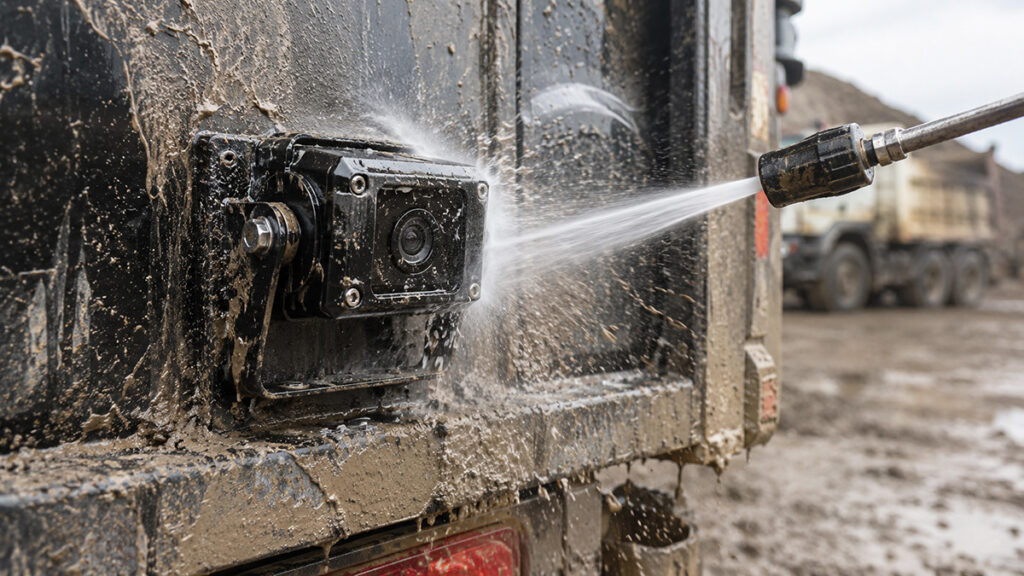
The cleaning operator stands close to the rear door and points a high-pressure water gun directly at the camera.
The water is concentrated.
It may hit the:
- Camera glass
- Housing joint
- Rear cable outlet
- Connector area
The camera is now experiencing a completely different type of water exposure.
This is why vehicle CCTV installers sometimes tell us:
“The camera worked perfectly for three months. After washing the truck, there was fog inside the camera.”
Or:
“The image disappeared after the vehicle was pressure washed.”
The camera may have been suitable for rain and normal road spray.
But its housing and sealing structure may not have been designed for repeated high-pressure cleaning.
So, for a heavy-duty vehicle camera, asking:
“Is the camera waterproof?”
is sometimes not enough.
A better question is:
“How is the vehicle used and cleaned?”
IP68 vs IP69K: A Simple Practical Comparison
| Working Condition | IP68 Camera | IP69K Camera |
|---|---|---|
| Rain | Usually suitable | Suitable |
| Normal road spray | Usually suitable | Suitable |
| Mud and dirty outdoor use | Depends on camera design | More suitable |
| Regular pressure washing | Not always recommended | More relevant |
| Heavy truck / machinery washing | Needs careful evaluation | Often preferred |
Important: An IP rating should never be considered separately from the actual camera construction and installation method.
Which Vehicles Really Benefit from IP69K Cameras?
Not every vehicle camera project needs IP69K.
For a camera installed inside the cabin, IP69K may have very little practical value.
But for externally mounted cameras, especially in dirty working environments, stronger enclosure protection can make a real difference.
Heavy Trucks and Trailers
Rear cameras on trucks and trailers are continuously exposed to:
- Rain
- Road dirt
- Wheel spray
- Mud
- Outdoor temperature changes
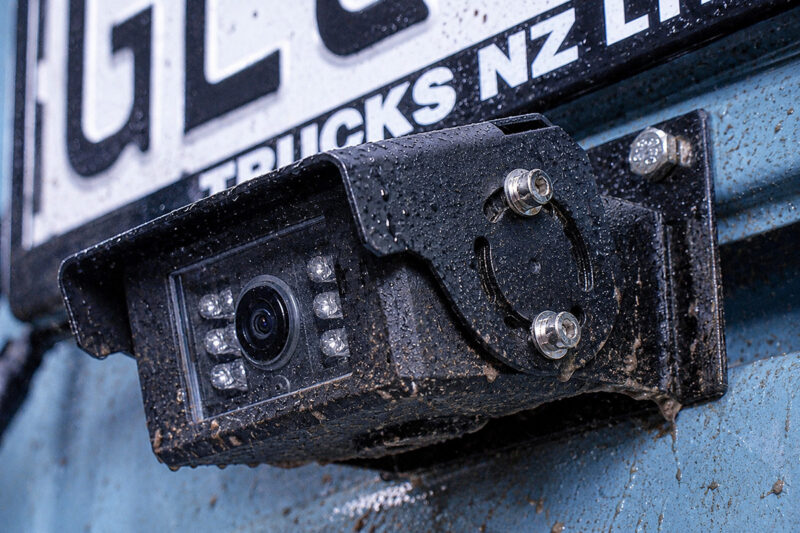
The installation position is often relatively low.
Some cameras are installed close to the bumper, rear cross member or license plate area.
After a long trip, these areas can become extremely dirty.
Fleet operators normally do not remove the camera and clean it carefully by hand.
They wash the complete truck.
A high-pressure cleaning jet can easily reach the rear camera.
The same problem applies to side cameras installed close to the chassis or wheels.
Construction Machinery
Excavators, wheel loaders, cranes and other construction machines operate in environments where dust and mud are normal working conditions.
After one working shift, a camera may be almost completely covered by dirt.
Cleaning can also be aggressive because operators need to remove dried mud from the machine body.
A normal outdoor camera designed mainly for rain may not be the best solution.
For these applications, we normally pay more attention to:
Camera sealing, housing material, cable outlet and connector protection.
Agricultural Vehicles
Tractors, harvesters and other agricultural machinery face:
- Dust
- Soil
- Moisture
- Outdoor storage
- Seasonal intensive use
Camera housings and cable exits can become covered by dirt.
When the machine is washed, the camera usually receives the same cleaning treatment as the rest of the vehicle.
For these projects, environmental protection should be considered before selecting the camera, not after a camera failure.
Garbage Trucks and Municipal Vehicles
Garbage trucks, road sweepers and municipal service vehicles may require frequent cleaning.
Some fleets wash their vehicles daily or after every working shift.
In this type of application:
Repeated wash cycles may be more challenging for the camera than occasional heavy rain.
This is an important point that is often missed during product selection.
Mining and Special-Purpose Vehicles
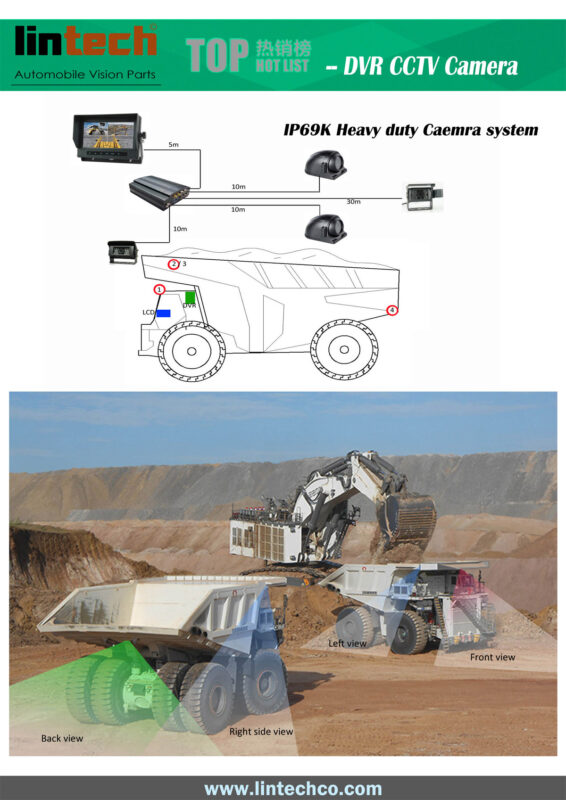
Mining trucks and off-highway machinery are another typical heavy-duty application.
Dust, vibration, mud and cleaning all exist in the same working environment.
For these projects, we normally evaluate the complete camera design instead of checking only the image resolution.
A 1080P camera with a beautiful image is not very useful if water enters the housing after the machine is washed.
So, Should You Choose IP68 or IP69K?
Buyers often ask us:
“Should I choose IP68 or IP69K?”
Our practical answer is:
The vehicle application should decide.
If the camera is mainly exposed to rain and normal outdoor conditions, a properly designed waterproof camera may already be suitable.
But if the camera is installed externally on a commercial vehicle and the vehicle is regularly cleaned with high-pressure equipment, IP69K becomes much more relevant.
Before selecting the camera, check three things:
1. Where is the camera installed?
A high-mounted rear camera and a camera close to a rear wheel face very different environments.
2. What kind of dirt reaches the camera?
Rain, road spray, mud, dust and waste contamination create different challenges.
3. How is the vehicle cleaned?
Hand washing and high-pressure fleet washing are not the same.
For example:
Camper rear camera:
Mostly exposed to rain, with relatively little mud.
Truck side camera near the wheels:
Receives road spray and dirt almost every day.
Forklift rear camera:
May work inside a warehouse and never see a pressure washer.
Excavator camera:
May be washed together with the complete machine every evening.
These are completely different working conditions.
The correct camera does not depend only on whether the vehicle has four wheels, six wheels or tracks.
It depends on the real environment around the camera.
A Waterproof Camera Does Not Mean a Waterproof Installation
This is one of the most common problems we see in vehicle camera projects.
The buyer orders an IP69K camera.
The camera is installed.
But the cable connector is left directly under the truck chassis.
The camera housing may have excellent environmental protection.
Water can still enter the system through an exposed connector or cable joint.
Then the image becomes unstable or completely disappears.
The customer says:
“The waterproof camera failed.”
But after checking the vehicle, the actual problem may be 10 meters away from the camera.
For an external vehicle camera system, we normally check the complete installation:
- Camera housing sealing
- Front glass sealing
- Cable outlet design
- Waterproof connector structure
- Extension cable joints
- Cable routing
- Connector installation position
One weak point can affect the complete system.
[IMAGE: Waterproof Camera vs Complete Installation]
Protected Connection
Whenever the vehicle structure allows it, we prefer to place cable connections in a protected position.
The connector should not be directly exposed to:
- Wheel spray
- Standing water
- Continuous mud
- Direct pressure washing
Exposed Connection
We also do not recommend routing cables in a way that allows water to naturally run toward an exposed connector.
These installation details sound simple.
But in our experience, simple details often decide whether a camera system works for several months or several years.
Camera Housing and Mechanical Structure Also Matter
An IP rating is important.
But experienced vehicle camera buyers should also look at the physical camera design.
For heavy-duty truck and machinery applications, we usually prefer a solid metal housing, such as aluminum alloy, for externally mounted cameras.
The reason is not only appearance.
The camera is continuously exposed to:
- Vehicle vibration
- Installation pressure
- Temperature changes
- Mud and dirt
- Long-term outdoor use
The housing needs to maintain the camera’s sealing structure over time.
Pay Attention to the Cable Outlet
The rear cable exit is another area we check carefully.
Vehicle vibration repeatedly moves the cable.
Over time, this can create mechanical stress around the cable outlet if the camera structure is poorly designed.
Internal Fogging Is Already a Camera Failure
The front glass and lens sealing are equally important.
The camera sensor may still work perfectly.
But if moisture enters the housing and creates internal fogging, the driver cannot see a clear image.
For a reversing or vehicle safety camera:
An unclear image is already a system failure.
IP69K Alone Does Not Make a Good Vehicle Camera
Waterproof protection is only one part of camera selection.
A good IP rating does not automatically mean the camera is suitable for your application.
You still need to consider:
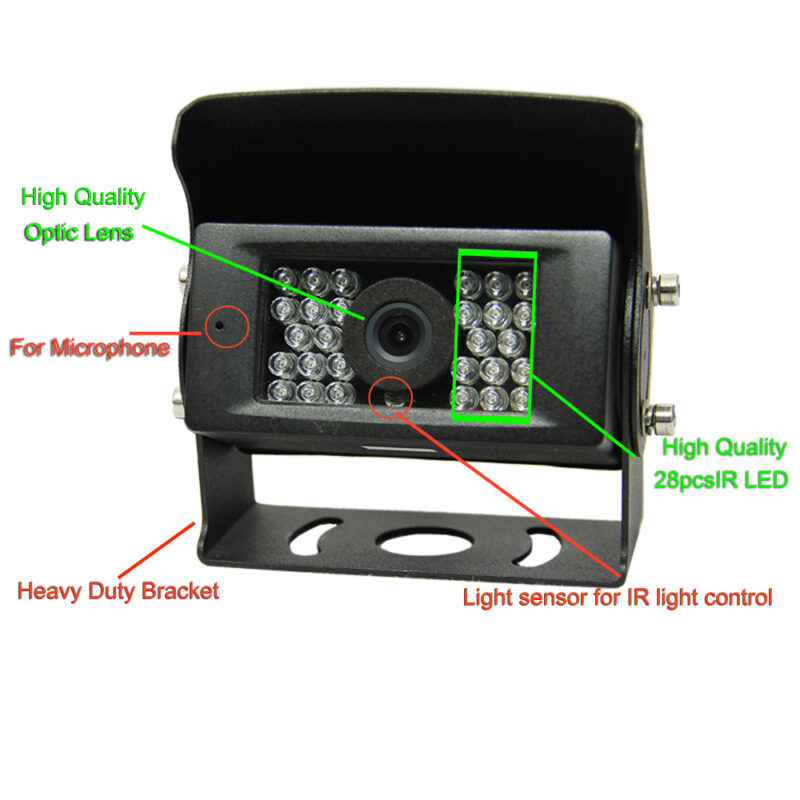
Video format. Resolution. Viewing angle. Night vision. Monitor compatibility.
AHD 1080P or CVBS?
For many current truck camera applications, AHD 1080P can provide a much clearer image than traditional CVBS systems.
The improvement is particularly noticeable when using larger:
- 7-inch monitors
- 10-inch monitors
- DVR monitors
However, the camera and monitor must support compatible video formats.
An AHD camera connected to an incompatible CVBS monitor may result in:
- No image
- Rolling image
- Distorted video
- Unstable display
Always confirm the video format before ordering.
What Viewing Angle Do You Need?
The lens angle also matters.
A 60° or 90° camera provides more detail within a narrower viewing area.
A 170° or 180° wide-angle camera covers a much larger blind spot.
However, objects may appear smaller and wide-angle lens distortion will be different.
There is no single “best FOV” for every vehicle camera.
A reversing camera and a side blind spot camera do not have the same viewing requirements.
The lens should be selected based on the camera position and the area the driver needs to see.
What About Night Vision?
Night vision requirements should also be confirmed before selecting the camera.
A truck reversing camera may need strong infrared illumination behind the vehicle.
A side blind spot camera may need a different IR configuration.
An excavator working-area camera may be used around additional work lights.
Again, the installation environment matters.
This is why we do not like selecting a vehicle camera from only one line of specifications:
“1080P + IP69K”
It sounds good.
But it still does not tell us where the camera will be installed or what the driver needs to see.
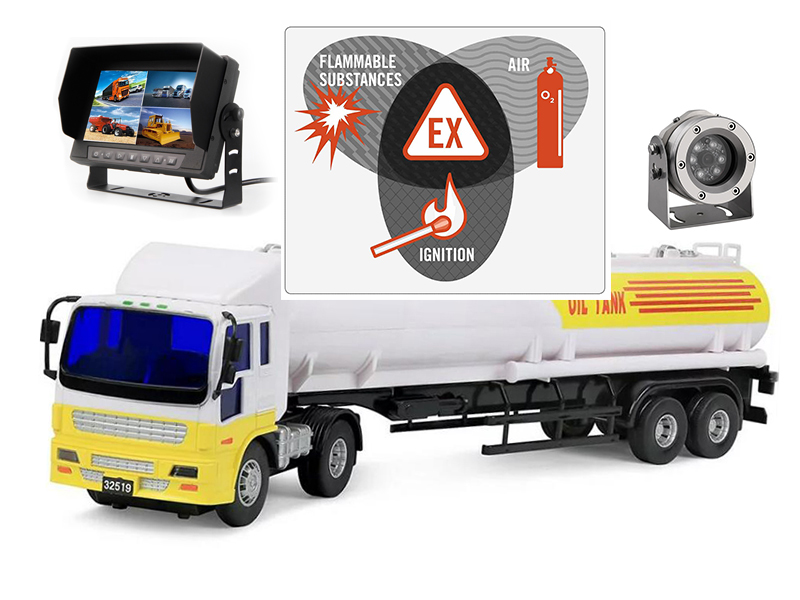
Important: IP69K Is Not Explosion-Proof
Fuel tanker and hazardous vehicle projects require special attention.
We have discussed fleet surveillance projects where operators wanted cameras monitoring:
- The vehicle front
- Driver cabin
- Both sides of the fuel tank
- Top tank area
The complete system may also include MDVR recording and online fleet monitoring.
In one Kenya project, the customer specifically raised an explosion-proof camera requirement.
For this type of application, it is extremely important not to confuse IP69K with explosion protection.
They are completely different requirements.
IP69K
Related to enclosure protection against dust and water exposure.
Explosion-Proof Certification
Related to equipment used in environments where a potentially explosive atmosphere may exist.
An IP69K rating does not automatically mean the camera is explosion-proof.
For oil tankers, fuel depots and similar applications, the exact camera mounting position should be checked.
The project team may need to confirm:
- Whether the installation location is a hazardous area
- What explosion-protection standard applies
- Whether a specially certified camera is required
A standard IP69K vehicle camera may be suitable for some external monitoring positions.
Other positions may require a specially certified explosion-proof camera.
Do not use “waterproof” and “explosion-proof” as if they mean the same thing.
They solve completely different problems.
Quick Checklist Before Buying a Heavy-Duty Vehicle Camera
Before ordering cameras for your fleet or project, we recommend confirming the following information:
Vehicle type
Truck, trailer, bus, excavator, tractor, crane or other machinery?
Camera mounting position
Rear, side, front, chassis or close to the wheels?
Working environment
Rain, dust, mud, snow, mining or agricultural use?
Cleaning method
Normal washing or regular high-pressure cleaning?
Operating temperature
Does the vehicle work in very cold or hot environments?
Video format
CVBS, AHD 720P or AHD 1080P?
Monitor or MDVR model
Is the camera compatible with your existing system?
Required FOV
60°, 90°, 120°, 170° or 180°?
Night vision requirement
Is infrared illumination required?
Hazardous environment
Is explosion-proof certification required?
In many cases:
One vehicle photo and one marked camera installation position are more useful than a long specification list.
From a real installation photo, we can often understand the application much faster.
Final Thoughts
IP69K is not simply a bigger number printed on a vehicle camera datasheet.
For trucks and machinery, its real value becomes clear when the camera faces:
Mud. Dirt. Outdoor exposure. Repeated high-pressure cleaning.
A camera that survives rain is not automatically designed for aggressive vehicle washing.
At the same time, an IP69K camera alone does not guarantee that the complete camera installation is waterproof.
Connectors, cables and installation methods still matter.
And for special applications such as fuel tankers, remember:
IP69K is not a replacement for explosion-proof certification.
At Kysail, we prefer to understand the vehicle before recommending a camera.
Tell us what vehicle you are working with and show us the camera mounting position.
Sometimes one installation photo can help us select a more suitable camera, lens angle and cable solution than ten pages of general product specifications.